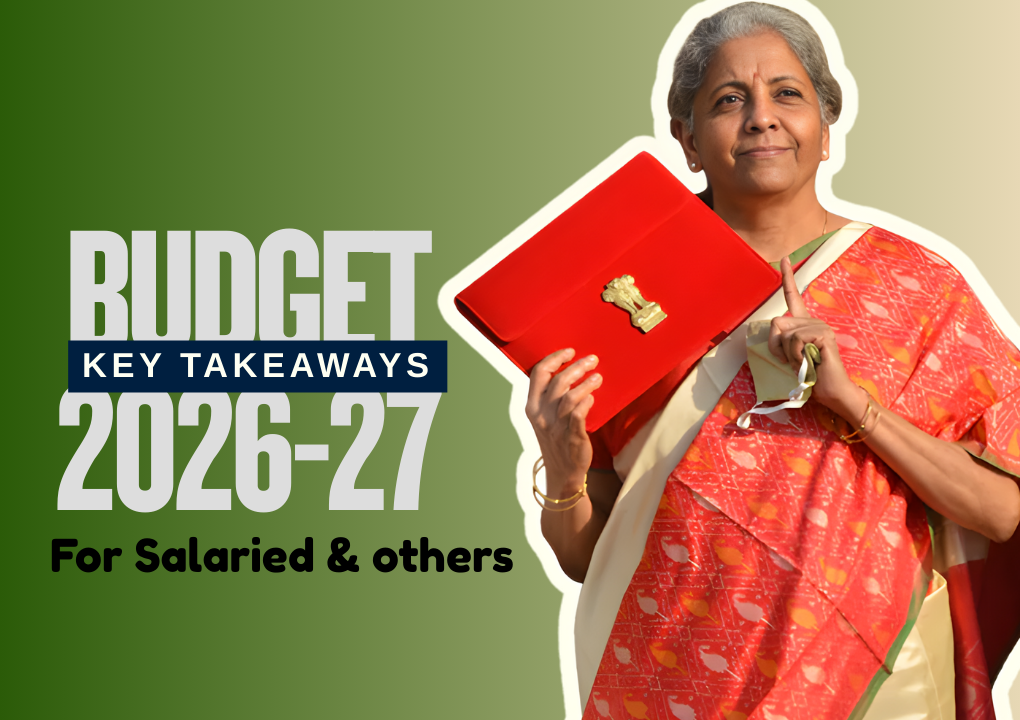
TL; DR
The 2026 Union Budget focuses on stability and structural simplification rather than headline-grabbing tax cuts. While there are no changes to income tax slabs or standard deductions, several quiet shifts will impact individual financial planning.
Direct Tax & Compliance
The most significant change is the introduction of the Income Tax Act, 2025, replacing the 1961 Act. This aims for simpler language and fewer sections to reduce compliance anxiety. Taxpayers also gain flexibility with a revised return window extended to March 31st.
Investment & Cash Flow Shifts
- Sovereign Gold Bonds (SGBs): Tax-free maturity is now strictly limited to primary issuances; secondary market purchases are subject to capital gains tax.
- Equities & Trading: Share buybacks are now taxed as capital gains for investors. Meanwhile, increased STT on Futures and Options raises costs for active traders.
- Liquidity: A major win for families is the 2% cap on TCS for overseas travel, education, and medical remittances, which reduces upfront cash blockage.
The Bottom Line
Budget 2026 rewards disciplined planning over tactical reactions. Individuals should avoid impulsive regime switching and instead focus on post-inflation purchasing power.
Direct tax impact, indirect cost pressures, and practical guidance for Indian families and professionals
Every Union Budget creates two parallel conversations.
One happens in TV studios and on social media—tax cuts, disappointments, and unmet expectations.
The other happens quietly, over the next few years—through compliance rules, cost structures, and behavioural nudges that shape how individuals actually experience money.
Income Tax Budget 2026 belongs firmly to the second category.
For most individuals, this is not a “headline” Budget. But it is an important one—because it changes how taxes work, even if it doesn’t dramatically change how much you pay.
This article explains:
- The real direct impact on individual taxpayers
- The often-ignored indirect effects on household finances and investments
- A clear framework for what individuals should (and should not) do next
Why Many People Feel “Nothing Happened” — And Why That’s Misleading
Most individuals judge a Budget using one question:
“Did my tax slab or deduction change?”
In Budget 2026, the honest answer is no.
- No income-tax slab changes
- No new standard deduction relief
- No surprise exemptions or withdrawals
That’s why many people feel underwhelmed.
But for individuals, financial outcomes are shaped less by announcements and more by structure:
- How easy (or stressful) compliance becomes
- How costs creep into daily life
- How investments are taxed over time
On those fronts, Budget 2026 quietly matters.
Big Picture Snapshot: What This Budget Signals for Individuals
From an individual taxpayer’s lens, Budget 2026 is best described as:
- Stability over stimulus
- Simplification over concessions
- Compliance ease over tax giveaways
It rewards disciplined planning, not tactical reactions.
Part A: Direct Impact — What You Can Measure on Paper
1. No Change in Tax Slabs: Stability, But With a Catch
Both the old and new tax regimes continue unchanged.
What this means:
- Your tax rate does not change automatically
- Any increase in tax outgo will likely come from income growth without inflation-linked relief
This creates a subtle but real concern for many middle-income households: bracket creep, where rising salaries feel less rewarding in real terms.
The solution isn’t panic—it’s better cash-flow planning, not last-minute tax tricks.
2. Old vs New Tax Regime: Why Confusion Persists
Budget 2026 continues the government’s preference for a simpler, deduction-light framework.
But simplicity is not the same as suitability.
- The new regime works well for predictable incomes and minimal deductions
- The old regime can still make sense for households with structured deductions and long-term planning
A common post-Budget mistake is switching regimes based on headlines instead of full-year math. Two individuals with identical incomes can still end up with very different tax outcomes.
3. The Income Tax Act, 2025: A Structural Shift, Not a Stealth Tax
One of the most important—but misunderstood—changes is the replacement of the 1961 Act with the Income Tax Act, 2025, effective from 1 April 2026.
Key intent:
- Fewer sections
- Simpler language
- Lower interpretational ambiguity
What it does not do:
- Increase tax rates
- Introduce hidden taxes
For individuals, this means:
- Lower risk of unintentional non-compliance
- Better clarity over time
- A more predictable tax environment
This is a long-term reform, not a short-term relief.
4. Easier ITR Compliance: Small Change, Big Relief
Two practical compliance improvements matter for individuals:
- Revised return window extended till 31 March
- More flexible filing timelines for non-audit cases
For salaried taxpayers and small professionals, this reduces:
- Filing anxiety
- Rushed errors
- Costly corrections
It’s not glamorous—but it meaningfully improves the tax experience.
Part B: Investment-Related Changes Many Individuals Miss
5. Sovereign Gold Bonds: A Crucial Tax Clarification
Only SGBs bought during primary government issuances are tax-free at maturity.
SGBs purchased from the secondary market:
- Do not enjoy tax-free maturity
- Are subject to capital gains tax
This matters for investors who bought secondary SGBs purely for perceived tax efficiency.
6. Share Buybacks and Dividends: Subtle but Important Shift
Buybacks are now taxed as capital gains in investors’ hands, rather than as dividends. This reinforces a broader theme: tax treatment of investments is becoming cleaner, but less forgiving of complexity or leverage.
7. The End of Leveraged Dividend Strategies
The removal of interest deduction against dividend and mutual fund income makes borrowing to invest far less attractive on a post-tax basis.
8. Higher Costs for Active Traders
The increase in STT on Futures and Options raises the cost of frequent trading, making discipline more important than ever.
Part C: Indirect Impact — Where Budgets Are Actually Felt
9. TCS Rationalisation: Real Cash-Flow Relief
TCS on overseas travel, education, and medical remittances is now capped at 2%, reducing upfront cash blockage.
10. Inflation, Expenses, and Real Returns
What ultimately matters is post-tax, post-inflation purchasing power—not nominal returns.
What Individuals Commonly Get Wrong After Every Budget
- Switching tax regimes impulsively
- Making rushed “tax-saving” investments
- Pausing SIPs due to uncertainty
- Treating the Budget as a trigger for major portfolio changes
A Better Way to Respond to Budget 2026
- Recalculate tax under both regimes—calmly
- Focus on monthly cash flow, not just annual tax
- Review goal timelines
- Check compliance early
- Make changes only if they improve long-term outcomes
Final Takeaway: Budget 2026 Is an Input, Not a Trigger
This Budget does not demand dramatic action from most individuals. What it requires is awareness, clarity, and thoughtful integration into your existing financial plan.
A Gentle Closing Thought: If you’re unsure how Budget 2026 affects your tax regime choice or investment structure, reviewing your financial plan holistically is always a wise step.
At NS Wealth, we understand that financial planning is not just about numbers; it’s about people, their aspirations, and their life goals. We Offer Comprehensive Financial Planning, Retirement Planning, expert-assisted MF Review, Financial Health Checkup In Pune, Mumbai, Bangalore, and across India